

I am often asked, “How do you get your inspiration to compose?” Well, this is quite a difficult question to answer, but I think I can narrow it down to a few significant factors.
From the age of about 12, the whole idea of being able to write a tune fascinated me. I remember trying to write a piece for my school brass band using a homemade manuscript book and a lot of determination! The piece was performed at the school concert, and in retrospect, it must have sounded like an incredibly bad performance of Mr. Handel’s work! (At this stage, I only ever listened to Mr. Bach and Mr. Handel.)
However, it did have a tune, and everyone seemed to enjoy playing it. This leads me to an important point: if you can write a good melody, it will help engage the player or listener, hopefully giving them a fulfilling musical experience right from the start! I’ve seen this happen with my pupils – young and old. If they have a piece with a melody that has grabbed them, the following week, we have a result – fab! This is surely the best recipe to present to anyone learning a musical instrument.
Almost every day, I naturally feel the urge to create a piece of music (even when I’m on holiday!) Being in new and interesting surroundings can often lead to new and interesting ideas. If I don’t write anything for a few weeks, I get very twitchy and can’t wait to get back to it!
Now that I’ve reached the coda of my life and will soon be hitting my 80th birthday, I’m still eager to create new and interesting music.
Ideas to Get You Started
Having an image in your head before you start is often one of the best ways to begin. Does the image suggest slow or quicker tempos? Does it evoke colours, or is it dramatic, romantic, or contemporary?
What’s the piece going to be about? You could even write a short story line to describe the feelings the image inspires.
Make a rough plan of the key or keys you’re going to use. Even if you don’t know much about musical form, it doesn’t matter – you’re creating sounds that no one else has ever done before, a unique piece of music!
Creating music on the piano or any other instrument is always a very unique and interesting journey. Don’t be afraid to start in any way that grabs you. Just using three chords as an underlay can result in an interesting piece. The very act will give you a great feeling of achievement.
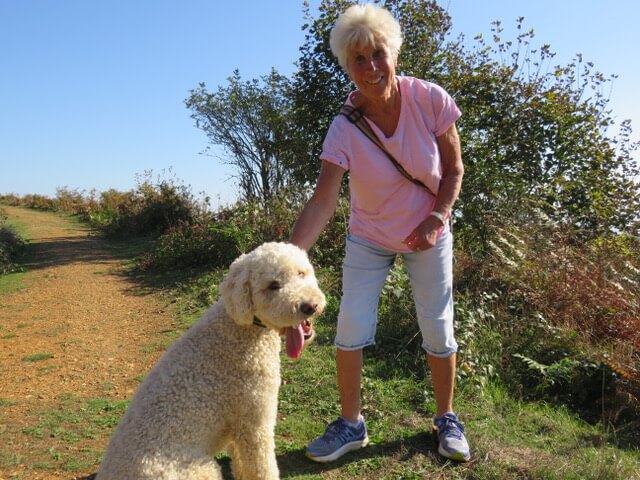
When I’m out walking with my dog, Charley, I sometimes sing a theme that comes to me, perhaps inspired by the atmosphere of the day – the weather, sunlight, sea, or something else. I record this on my phone, and when I get back, I tinker around with it until something develops… or not!
This is only one way to get creative, but often, just fiddling around with your instrument will produce a melody you can start composing with. This is a really fun way to write and encourages lots of creative juices to flow.
I nearly always start with a title for the piece, and that gives me the perfect setting for the mood and style I am aiming for. It’s a bit like painting a picture from the start: a blank canvas, then gradually introducing blocks of colour in the way of a theme, and using different textures to reinforce the mood. This is especially true when writing an orchestral score. It’s fascinating and amazing how a phrase will change its character and mood just by introducing a different instrumental sound at the right moment.
The Creative Process
Because I’ve been composing for many years, I never really consider the form of a new work. I tend to let it happen naturally, and luckily, it usually works out. But for anyone starting from scratch with a new composition, I recommend starting by making a plan including keys, form, title, etc.
Try to make your piece sound balanced by using dynamic changes, key changes, and time signature changes. These can also bring a lot of interest.
There are so many things to think about when composing! However, the more you write, the better you will become at it.
It’s also quite usual for me to work on a piece for hours, only to decide that it’s going nowhere… so into the trash it goes. I do have quite a few moments of de-composing!
It also gets increasingly more difficult not to repeat myself. This happened during the writing of one of the After Hours books. I thought I had written some good melodic pieces, only to be told by the editor that I had written two of them before. She was right! Whoops. Composition overload!
Final Thoughts
Wherever you are in your musical journey, don’t be afraid to start composing – you never know where it can end! I would be interested to hear from anyone who is trying to compose. Let’s have a Composition Conversation!
Good luck to everyone!
Look out for the next postcard in which I will be discussing another topic. What would you like our next conversation to be about?
Happy Composing!
Pam
Leave a Reply