

I hope you are enjoying listening to my collection of Conversations.
On this postcard, I would like to talk about how I came to write music and the musical paths that led to my present-day offerings.
The journey has been quite a long one, so I think I’ll start from the very beginning.
My first musical experience was in 1954, attending the local primary school.
In my school, music was treated as a very important subject, and everyone from the age of 6 was taught the recorder and how to read the notes – one hour every morning before lessons began. I can’t imagine this happening in many primary schools today.
By the time I was 9, I really understood how to name the notes and their association with pitch.
Many of the kids could be heard tootling their recorders while walking up and down the streets or driving everyone nuts at home with “Michael Row the Boat” or similar favourites. But what a fun way to start life’s musical journey! Foundation is so important right from the start.
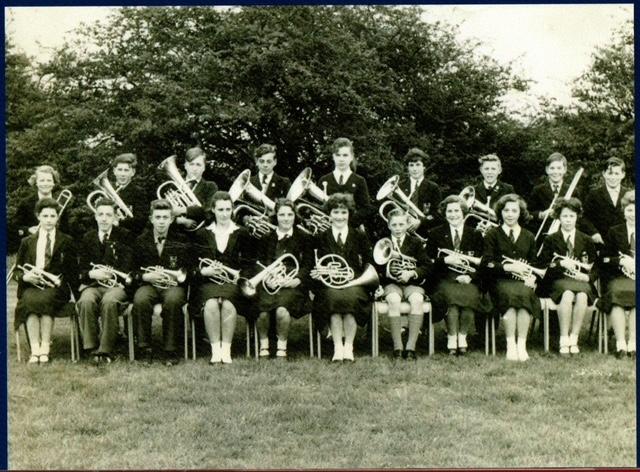
2nd step: My musical journey continued in my secondary years by playing a brass instrument. Coming from North Lincolnshire, the brass band movement was thriving, with many bands to choose from. I was given a very old tenor horn that the headmaster had found in a chicken run. I proudly took it home for Mum to clean up – my brass-playing life began.
There were no lessons at this point; just sitting next to a more experienced player and copying was the format for learning. Thankfully, lessons started a bit later.
3rd step: We also had a piano at home, which I was desperate to play. I was really keen and spent many hours on the piano and the tenor horn, which provided me with a great foundation for further musical opportunities.
The opportunities arose when I entered Trinity College of Music at the age of 16. By then, I had progressed through all the usual grades but had swapped the horn for a French horn.
I studied French horn, piano, cello, and composition in a four-year performer course and loved every minute.
Although I didn’t continue with composition or the cello, I had always written experimental piano pieces for my own amusement, and at least I understood a bit about the string department.
Step 4: Playing the French horn was, hopefully, going to be my future employment, so my next journey began.
Twenty years of playing professionally and teaching piano and brass was the greatest foundation for leading into my present recognition as a composer.
Writing music for my pupils that they wanted to play was key to successful teaching. The first publication of Jazzin’ About was the very first of 200 books that followed.
Today, I am writing with a more mature outlook and am trying to establish a more contemporary feel to my works. Conversations is the first of hopefully many more collections written in this style.
The opportunities offered to me over my lifetime have definitely contributed to my success as a composer of educational music.
I would suggest that, whatever standard you have reached, there is always more to learn and enjoy – just grab it.
Have a go at writing a piano piece for yourself and experiment. You might have a hidden talent for creating. You will never know unless you try!
By the way, I sent my very first manuscript to 33 different publishers before I was published by Faber Music four years later.
Never give up on anything you feel passionate about.
Good luck with your musical journey.
I’ll be offering some advice on how to go about starting a composition in the next postcard.
Let’s have a creative conversation!
Pam W
Leave a Reply